Skin cancer in patients previously treated for head ringworm infection
Skin Cancer in Patients Treated with Radiation for Tinea Capitis
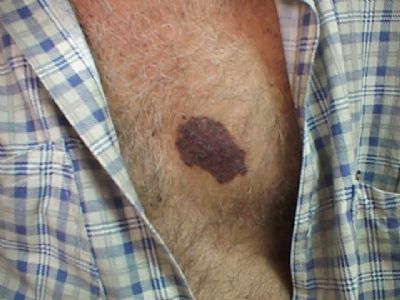
A very common problem in Israel, as in many countries worldwide, is the development of skin cancers in patients who were treated with radiation for tinea capitis (a fungal infection of the scalp skin and hair). The tumors that appear in these patients are mainly basal cell carcinoma, often in a special pigmented form that looks black and can resemble melanoma. Other tumors may also appear as a result of radiation for tinea capitis — including squamous cell carcinoma of the skin, various benign and malignant brain tumors, and thyroid cancers.
Radiation treatment for tinea capitis was a standard therapy worldwide from the 1940s through the 1960s. The late consequences of these treatments became evident only many years later. It was discovered that after a latency period of 20 to 50 years, these radiation treatments caused the development of various types of cancer in many of the treated individuals.
In Israel, radiation treatment for tinea capitis is also tied to a unique social context. During the early years of the state, these treatments were performed mainly on immigrant children from North African countries who were taken from transit camps or immigration centers, often without clear explanation of the purpose of the treatment and without explicit informed consent. As a result, many of those treated felt harmed and discriminated against. Consequently, the State of Israel established a law to compensate individuals harmed by radiation treatments for tinea capitis.
Under this law, those affected are entitled to financial compensation according to the severity of the harm caused. Eligibility for compensation is determined by a special committee of the Ministry of Health.



